
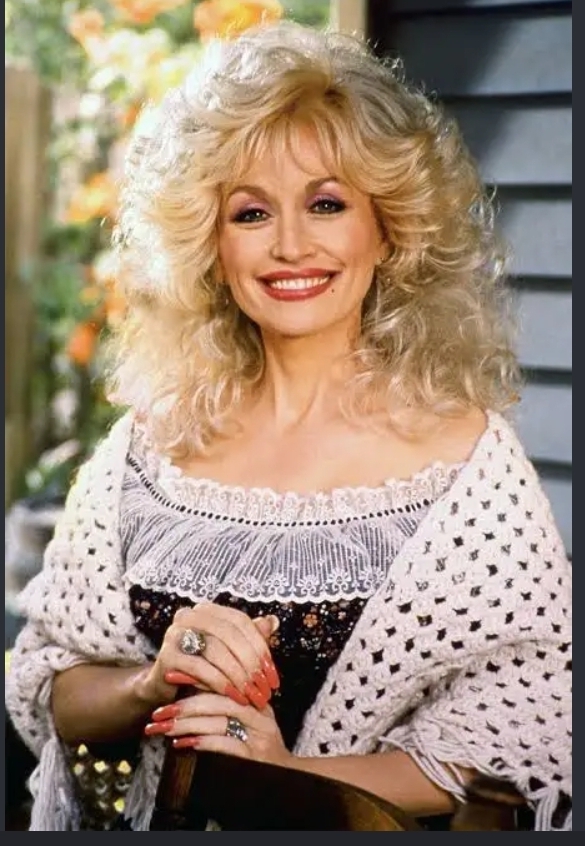
Dolly Patton, music icon, song writer business woman is dead. She died at age 80.
Her death marks the end of an extraordinary life that was much bigger than the music for which the world knew her.
Dolly Parton was a singer, songwriter, actress, entrepreneur and philanthropist. But beneath those familiar descriptions was something far more unusual: a woman who transformed the circumstances of her birth into the raw material for an enduring philosophy of creativity, enterprise, compassion and service.
She was born on January 19, 1946, in rural Tennessee, the fourth of 12 children. Her family lived in a one-room cabin and was so poor that, according to the Tennessee State Museum, her father paid the doctor who delivered her with a sack of cornmeal.
Yet from that beginning emerged one of the most recognisable personalities in global entertainment.
Perhaps the most remarkable thing about Dolly Parton was that she never appeared embarrassed by where she came from. She made poverty part of her artistic vocabulary rather than something to conceal. In songs such as Coat of Many Colours, she demonstrated that dignity did not require wealth and that memory could be transformed into art.
Her story was therefore not simply one of escaping poverty. It was about carrying the lessons of poverty with her—and eventually using her success to change the circumstances of others.
MORE THAN A SONGWRITER
Parton’s extraordinary songwriting catalogue is only one part of her achievement.
She reportedly wrote her first song at the age of six and was performing on the Grand Ole Opry by the age of 13. Over a career spanning almost six decades, she wrote thousands of songs, many of which became standards far beyond country music.
There was, however, another fascinating dimension to her songwriting: she could turn intensely personal experiences into universally understood emotions.
I Will Always Love You, written as she was leaving her professional partnership with Porter Wagoner, became one of the most famous songs in modern music history. Years later, Whitney Houston’s monumental rendition introduced the composition to another generation and another audience.
Likewise, Jolene transformed an intensely personal fear of romantic loss into a song recognised across cultures and generations.
Parton understood something that many artists struggle to master: the more honestly personal a story is, the more universal it can become.
THE BUSINESSWOMAN BEHIND THE GLITTER
The Dolly Parton story is also the story of a remarkably astute businesswoman.
At a time when women in the entertainment industry were frequently expected to remain performers rather than become owners and entrepreneurs, Parton built businesses and intellectual properties around her name and creativity.
Dollywood, the Tennessee theme park associated with her, became more than an entertainment attraction. It became an economic institution in the region where she was raised, creating employment while allowing Parton to reinvest in the community that had shaped her.
She understood that celebrity could be converted into something more durable: an institution that could continue creating value beyond the lifespan of a hit record.
That may ultimately prove to be one of her greatest business lessons.
THE SECRET BEHIND THE “BOOK LADY”
Perhaps one of the least appreciated aspects of Parton’s legacy is the scale and emotional origin of her literacy philanthropy.
In 1995, she established Dolly Parton’s Imagination Library after reflecting on her father’s inability to read and write. What began as an initiative for children in her home county in East Tennessee developed into an international programme that provides free books to young children.
The idea was deceptively simple: give children books early enough to make reading a natural part of childhood.
But the story contained a deeply personal irony.
The daughter of a man who could not read became one of the world’s most influential promoters of childhood literacy.
That transformation—from a childhood limitation in her own family into an opportunity for millions of other children—may be one of the most beautiful chapters of her life.
SHE DISCOVERED THAT KINDNESS COULD BE SYSTEMATIC
Another distinctive feature of Parton’s philanthropy was that she did not always approach charity as a one-off act of generosity.
Through the Dollywood Foundation, she experimented with programmes designed to change behaviour and outcomes.
One example was the “Buddy Program”, through which she offered financial incentives to students in her home county to remain in school. According to the Dollywood Foundation, the dropout rate among the participating classes fell dramatically, from 35 per cent to 6 per cent.
That was Dolly Parton at her most innovative: she did not merely ask people to dream. She tried to create practical mechanisms that could help them achieve those dreams.
Her philanthropy during crises followed the same instinct. She donated $1 million toward COVID-19 vaccine research, a contribution that became associated with the development of the Moderna vaccine.
A WOMAN WHO REFUSED TO BE PUT IN A BOX
Parton’s career also defied easy categorisation.
She was country music royalty, yet she crossed into pop music. She was a recording artist who became a successful film actress. She was a celebrity who became an entrepreneur. She was a glamorous public figure who built a reputation for humility and accessibility.
She was also able to appeal to people across political, religious and cultural divides, maintaining a remarkable ability to connect with audiences without allowing public controversy to overwhelm the central themes of her persona: music, family, hard work, humour, faith, kindness and giving.
Her appearance became iconic, but Parton was often the first person to joke about it. Behind the elaborate hair, bright clothes and unmistakable style was a woman who understood the power of controlling her own image rather than allowing other people to define her.
HER GREATEST CREATION MAY NOT HAVE BEEN A SONG
Dolly Parton’s most enduring achievement may ultimately not be Jolene, 9 to 5 or I Will Always Love You.
It may be the idea that success carries an obligation to remember where one came from.
She never abandoned the Appalachian girl who grew up in a poor family. Instead, she carried that girl into Nashville, Hollywood, the boardroom and eventually into the homes of millions of children receiving books through the Imagination Library.
She turned memory into music. She turned fame into enterprise. She turned wealth into philanthropy. And she turned personal hardship into opportunity for others.
As the world mourns Dolly Parton, it should therefore remember not only the extraordinary voice and the extraordinary songs, but the extraordinary architecture of a life deliberately built around giving something back.
Dolly Parton once emerged from a one-room cabin in Tennessee with little more than talent, determination and an imagination.
Eight decades later, she leaves behind music, businesses, books, jobs, films, institutions and generations of people who were touched by her work.
That is a legacy considerably larger than fame. May she continue to be remembered by the people she touched with her music, worldwide.
##Dolly Patton dies
About the Author



So,I like it